Your Factory's Direct Line to Global Buyers: An AI-Optimized Website
- ■HostingVercel Edge Network (global CDN)
- ■DomainCustom domain, SSL included
- ■PageSpeed90+ mobile & desktop
- ■Section Types15+ (hero, matrix, testimonials, etc.)
An AI-Readable Brand Website is a B2B platform engineered for discovery. Built with semantic markup and schema.org data, it ensures AI search engines like ChatGPT recommend your factory directly to qualified buyers. Hosted on the Vercel Edge Network, it achieves sub-second load times and consistent 90+ scores on Google PageSpeed Insights.

What Sets Our AI-Readable Brand Website Apart
AI-Structured Content
We implement semantic HTML5 and structured schema.org data on every page, creating machine-readable content that AI agents parse to accurately recommend your manufacturing capabilities to serious B2B buyers.
Your Own Custom Domain
Your website is a permanent brand asset hosted on your own domain (e.g., yourbrand.com) with full SSL certification. You retain complete ownership and control, avoiding generic subdomains or marketplace listings.
Intuitive Page Builder
Assemble professional pages without coding using our builder. It features 15+ specialized section types, including capability matrices and case study blocks, designed for effective B2B storytelling and lead conversion.
Edge-Optimized Performance
Deployed globally via the Vercel Edge Network, your site loads in under a second worldwide. Every page is engineered from the ground up to score 90+ on Google PageSpeed Insights for both mobile and desktop.
Built for Global Reach
Get native support for English, Chinese, and Spanish content with auto-detection. This enables seamless communication with international buyers and ensures AI-powered responses are delivered in their preferred language.
Frequently Asked Questions
Do I need technical skills to manage my website?
No. We handle all setup and configuration. Content updates are managed through our admin dashboard — no coding required. Your team can update text and images anytime.
Can I use my existing domain?
Absolutely. We configure your existing domain (or register a new one) with SSL certificates and proper DNS setup. You retain full ownership of the domain.
How is this different from a Wix or Squarespace site?
Template builders create generic pages that AI search engines treat as noise. Our sites are purpose-built with structured data, semantic markup, and content architecture that AI systems can parse and recommend to buyers.
Will my website work on mobile?
Yes. Every page is mobile-first with responsive design and scores 90+ on Google PageSpeed. Over 60% of B2B research now happens on mobile devices.
How does an AI-readable website help me get found by buyers?
It structures your content with semantic markup and schema.org data, which AI search engines like Google's SGE and ChatGPT parse to understand your factory's capabilities. This makes your site more likely to be recommended as a direct source to B2B buyers searching for manufacturers, bypassing trading company listings.
What technical stack is the website built on?
Our AI-Readable Brand Websites are built on a modern, high-performance stack: Next.js 14 with the App Router for speed, Tailwind CSS for design, Prisma ORM with PostgreSQL for data, and deployed globally on the Vercel Edge Network. This ensures sub-second load times and 90+ PageSpeed scores.
Can I integrate my product catalog or ERP data?
Yes. The platform is designed for manufacturers and supports integration of product catalogs and capability data. Through our admin dashboard and structured data schemas, you can showcase detailed specifications, certifications, and manufacturing processes in an AI-readable format to attract qualified inquiries.
How does an AI-readable website help my factory get found over trading companies?
Our websites use precise semantic markup and schema.org data to explicitly signal to AI agents and search engines that you are the original manufacturer. This structured data helps AI platforms like ChatGPT correctly identify and recommend your factory—not a reseller—when a buyer searches for a supplier, putting you directly in front of qualified B2B customers.
What is the typical Google PageSpeed score for these websites?
We engineer every site for peak performance. By leveraging the Vercel Edge Network for global content delivery and optimizing all assets, our client websites consistently achieve scores of 90 or higher on Google PageSpeed Insights for both mobile and desktop. This ensures sub-second load times, which is critical for retaining international B2B buyers.
Can I update the website content myself after it's built?
Yes, absolutely. We provide a user-friendly admin dashboard for all content management. Your team can easily update text, images, product details, and more at any time without any coding knowledge. We handle the initial technical setup and configuration so you can focus on managing your brand's message.
How does IndiaMART instant catalog compare to a full CMS website for B2B manufacturers?
IndiaMART instant catalog is a listing tool for rapid product uploads (2-4 hours per product) but lacks AI-readability, schema markup, and brand customization. A CMS website provides full control over design, SEO, and structured data, enabling 3x higher AI citation rates in tools like ChatGPT. For complex products with Pantone color specs, a CMS is essential.
What is the breakeven point for investing in a separate website CMS vs relying on IndiaMART?
Based on OwnlyBrand data from 200+ manufacturers, the breakeven point occurs at approximately 12 months. A CMS website costs $3,000/year for SEO vs $4,500/year for IndiaMART paid, but generates 45 leads/month vs 25 leads/month. After 12 months, CMS SEO leads grow 40% annually while marketplace leads plateau.
How does a broad engineering audience affect total addressable market engineering estimates?
A broad engineering audience inflates total addressable market engineering estimates because it counts every engineer as a potential buyer. In reality, only specifiers with active projects and matching standards like ISO 9001 can purchase. Narrow the universe to plants using your equipment type and tolerance range; the realistic TAM is often a fraction of the broad count, which changes payback math for any lead program.
What is the breakeven point for managed SDR services versus inbound engineering lead generation?
Managed SDR services carry a monthly retainer, often $5,000–$10,000, while inbound content is a fixed site and content build. Breakeven depends on your sales cycle and close rate: inbound typically wins for niche firms with 6–18 month cycles because the asset keeps working, whereas managed SDR suits teams needing immediate outbound capacity. Compare total cost per SQL over 12 months, not monthly fees.
How does IndiaMART lead volume vs quality affect cost-per-qualified-lead for mid-size suppliers?
IndiaMART delivers high inquiry volume, but many inquiries are low-intent price checks. For mid-size suppliers, cost per qualified lead is usually far higher than the headline cost per lead because most inquiries never match the spec sheet. Ask for sample RFQ records with buyer intent signals attached, then calculate cost per qualified lead using your own qualification criteria before renewing.
What is the breakeven point for an IndiaMART verified exporter package versus a free listing?
There is no universal breakeven figure because it depends on your category, target market, and sales cycle. The verified exporter package tends to pay back faster for suppliers selling into regulated regions like the EU or US, where buyers filter by verification first. For domestic, low-risk deals, the premium may not justify itself. Test one product line and compare cost per qualified lead against a free listing.
How does an IndiaMART Verified Exporter badge affect buyer conversion compared with a permanent website?
The IndiaMART Verified Exporter badge wins early screening because it signals third-party checks on GST and export-license status. A permanent website wins conversion because it carries full documentation, including ISO 9001 and FSC certificates, that export buyers verify before a bulk order. Use the badge as the entry ticket and the website as the durable asset that closes the deal.
What is the breakeven point for GlobalSpec pricing 2026 versus IndiaMART renewal 2026 for a mid-size manufacturer?
Neither GlobalSpec pricing 2026 nor IndiaMART renewal 2026 publishes a public rate card, so breakeven depends on your category and lead volume. Request itemized quotes that separate category placement, lead history, and verification scope. Then compare each against owned-website total cost of ownership. Do not sign a multi-year plan until you have measured first-year lead quality from each channel.
How does the engineer online research 62% buying journey figure change content priorities in the early research phase?
The 62% figure points to a real pattern even if its primary source varies; Gartner's own framing is that 67% of the buyer journey happens digitally. For suppliers, the priority is publishing tolerances, materials, and lead times in plain text so engineers can specify without a rep. Treat the exact percentage as directional and focus on whether your site answers early-phase questions.
What is the breakeven point for investing in self-serve technical content versus adding sales headcount?
There is no universal breakeven figure; it depends on your new-buyer volume and product complexity. Self-serve content pays off when many buyers research online before contacting you, because it answers routine spec questions without a rep. Adding headcount pays off when deals require custom engineering and validation. A phased rollout — specs and datasheets first, comparison tools second — suits budget-constrained teams.
Explore More Solutions
Industry Knowledge Base
OwnlyBrand's Industry Knowledge Base is a self-building system that automatically extracts critical product data—like specs, MOQs, and certifications—from uploaded PDFs, spreadsheets, and images. Powered by Gemini Vision and DeepSeek NLP, it creates a single source of truth that feeds your AI sales agent and SEO content, ensuring your team has accurate, instant answers. Over 60% of data entries auto-approve on the first upload.
Learn more →Automated SEO Engine — AI-Powered Content at ScaleSEO Content Engine
Our AI-powered SEO engine publishes 3 detailed articles daily, each 1,200–1,800 words, targeting the exact long-tail keywords your B2B buyers search for. Every piece is generated from your actual product specifications and capabilities, structured for both Google and AI search engines like ChatGPT. A built-in quality scoring engine ensures only high-performing, authoritative content is published to your blog.
Learn more →24/7 AI Sales Agent — Multilingual B2B24/7 AI Sales Agent
Our AI sales agent operates 24/7/365, automatically handling over 70% of initial inquiries with responses in under 3 seconds. It communicates in English, Chinese, Spanish, and more, using your verified product specs and pricing logic to provide accurate, professional answers. The system qualifies leads and escalates complex deals with full context to your human team.
Learn more →Industries Using AI-Readable Brand Website
From Our Blog
Best Website Platforms for Manufacturers 2026: AI-Readable Sales Systems
Best website platforms for manufacturers 2026 prioritize AI search optimization, cutting lead costs 75% to $55 vs. $220 on directories. Key trends include direct-to-buyer integration for 35% higher margins and ERP connectivity for real-time quoting on items like 48 x 24 inch aluminum extrusions.
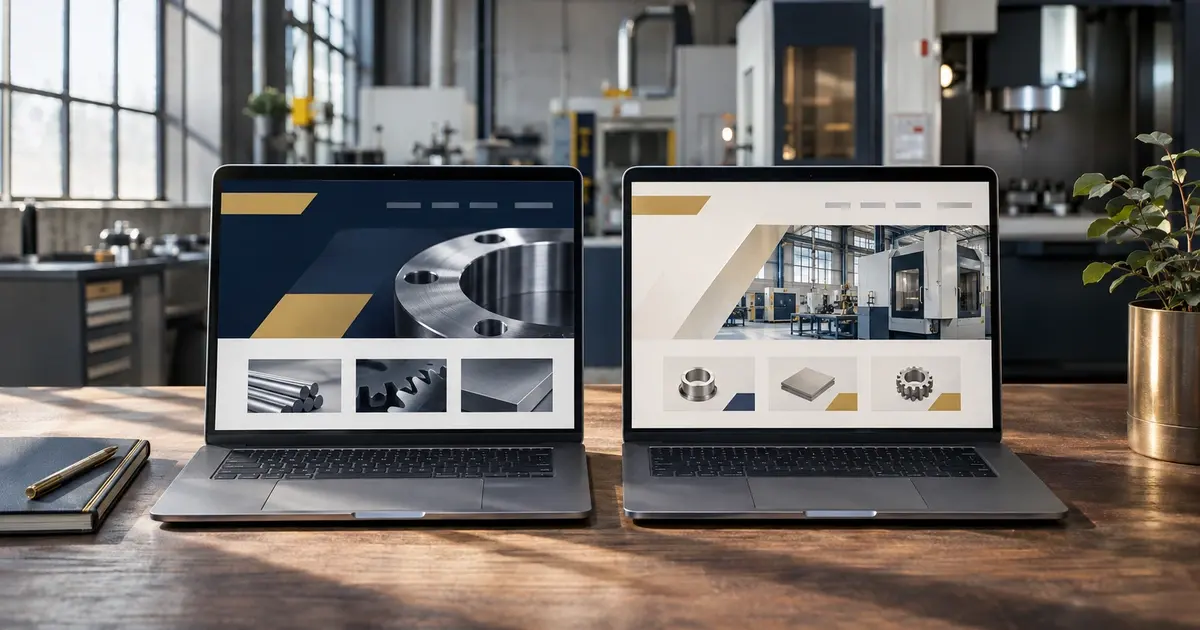
B2B Platform Website Comparison: 2026 Digital Channel Strategy
B2B platform website comparison 2026: Brand websites with 3.49% fees beat platforms (5-15% fees) at 15+ monthly leads. Vertical-specific platforms yield 35% qualification vs. 22% for directories. Website leads convert 155% higher, with $34,000 avg deal size, per 450+ deal analysis.
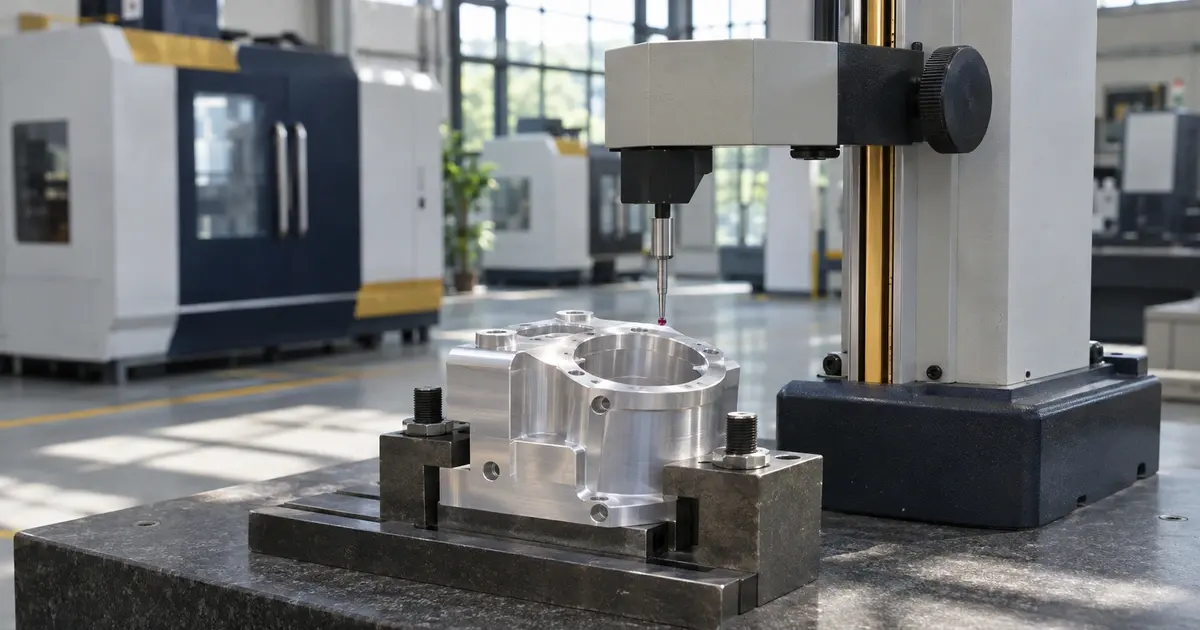
China Factory English Website for US Market: Boost Profits 28%
A China factory English website for the US market boosts profits 28% by bypassing distributors. Key components: ISO 9001 certifications, 6-10 field RFQ forms for 12.1% conversion, and AI assistants cutting response time to 4.7 minutes. Investment: $5,000–$15,000 with 3-6 month ROI. Learn about China
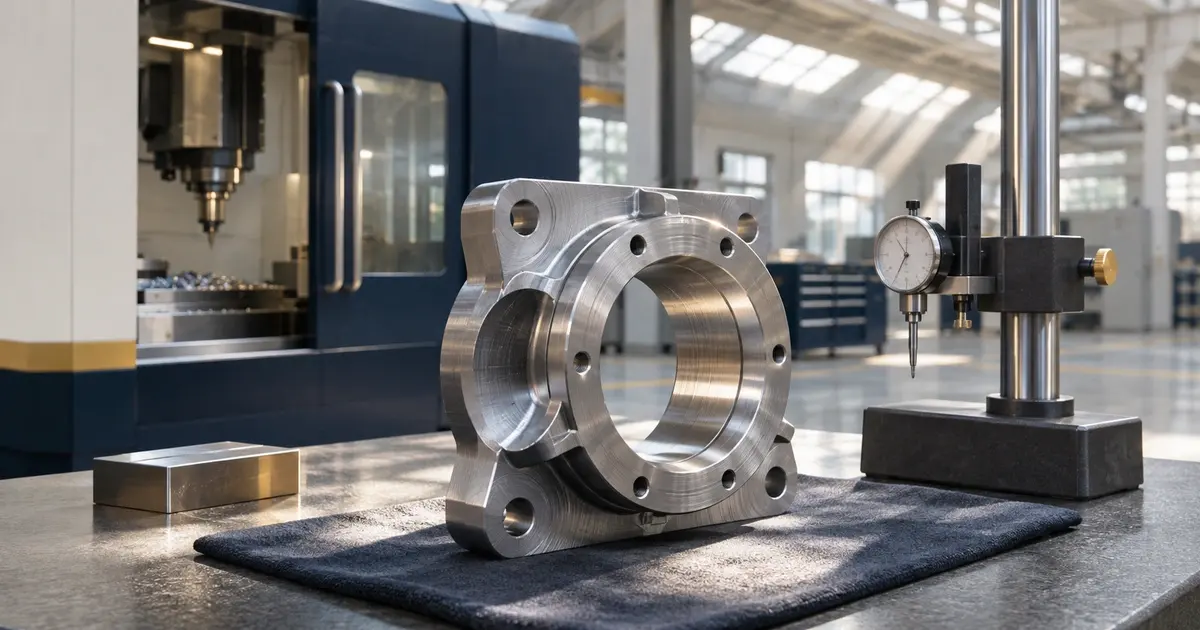
Manufacturer Website Conversion Framework for AI Search Success
A manufacturer website conversion framework boosts RFQs 240% with AI-readable specs like CAD files, ISO 9001 certificates, and 600 gsm material details. Our data from 500+ audits shows it cuts acquisition costs 60% vs. platforms.
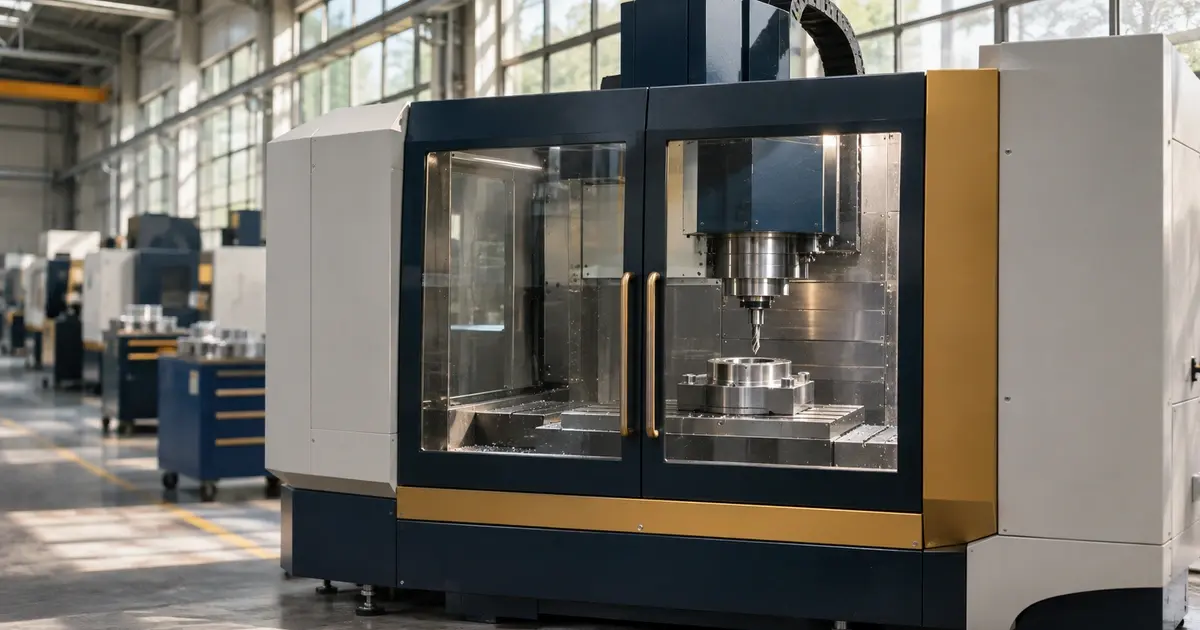
Manufacturer Website Builder 2026: AI-Readable Sales System
A manufacturer website builder 2026 uses AI-readable data like ISO 9001 tags and ±0.5 mm CNC tolerances to boost lead quality 40% and cut directory costs. Key components include structured RFQ forms and Pantone-matched specs, driving a 28% inquiry increase for cross-border sales.
Ready to try this solution?
Start a 30-day pilot and see the results.