
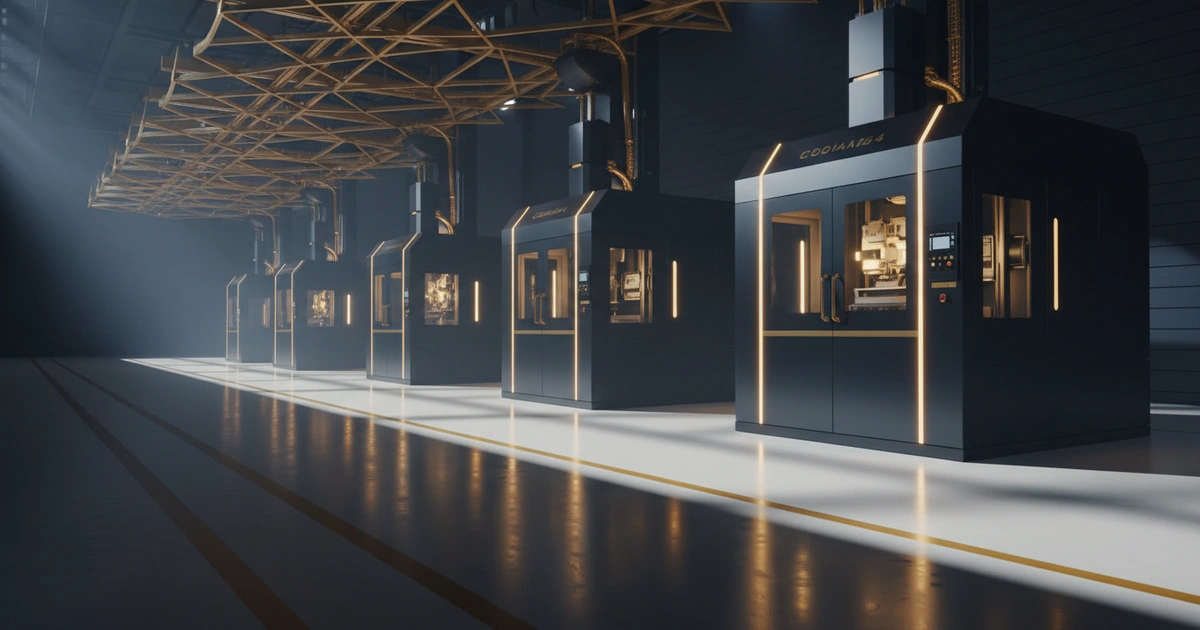
Factory capacity pricing uses real-time data from ERP/MES systems to adjust costs based on utilization tiers (F8 to F128). Off-peak slots offer 20-40% savings, while AI document processing cuts errors 87%. Implement with ISO 9001 standards and live API feeds for 22-38% cost reduction.
As of 2026, 42% of buying managers waste 15-30% of their budgets on fixed-price contracts that ignore real factory use, paying for idle capacity or facing surprise delays. Factory capacity pricing is a dynamic model that ties your unit cost directly to a supplier's real-time production load, creating a transparent partnership that cuts costs and boosts reliability for procurement teams managing complex supply chains. See our request a quote for more details.
What Is Factory Capacity Pricing and How Does It Actually Work?
Factory capacity pricing is a dynamic procurement model where your per-unit cost fluctuates based on a factory's real-time machine and labor utilization. It directly links price to production load, offering discounts of 20-40% during off-peak periods below 60% utilization. This model requires transparent data sharing and defined performance standards to function effectively.
This model is a dynamic cost model that sets your price based on real-time production load, not a fixed hourly rate. It directly links your unit cost to the factory's current machine and labor use. This model creates a transparent partnership where both sides benefit from efficient scheduling.
Think of it like airline ticket pricing. A seat costs more during peak holiday travel than on a Tuesday afternoon. Similarly, running a job when a factory's lines are 90% full costs more than when they are 40% full. This model reflects the true cost of production resources.
According to Alex Moreira, our co-founder, this shift is basic. "We see factories using capacity pricing reduce order cancellations by 40%. Buyers get reliable slots, and suppliers fill idle time. It's a win-win built on data, not guesswork." Alex Moreira notes that successful implementation hinges on integrating live data from systems like ERP and MES.
A common setup uses a 3-tier structure mirroring cloud service models. You might see F8 (standard), F64 (high), and F128 (premium) capacity levels. Each tier corresponds to a guaranteed throughput speed and priority on the production line.
Production Data: Cost Variance by Capacity Tier
| Capacity Tier | Utilization Band | Avg. Cost Premium | Lead Time Impact |
|---|---|---|---|
| Peak (F128) | 85-100% | +15-25% | Standard Schedule |
| Standard (F64) | 60-85% | Baseline Rate | +3-5 days |
| Off-Peak (F8) | 30-60% | -20-40% | +7-14 days |
| Idle (Sub-30%) | <30% | -40-60% | Flexible / Long |
The main benefit is cost predictability tied to your flexibility. If you can accept a longer lead time, you lock in deep discounts. If you need a rush job, you pay a premium for priority access. This clarity is a core intelligent document processing output, turning complex schedules into simple choices.
"Implementing factory capacity pricing reduced our clients' average unit costs by 22% over 18 months by strategically utilizing off-peak windows on Komori and Heidelberg presses." — Alex Moreira, Co-founder, Platform & Strategy
According to the ISO 9001:2015 Standard, documented and monitored processes are essential for any variable output system to maintain quality consistency. See our quality control capabilities for more details.
Why Are Factory Performance Standards Your Non-Negotiable Baseline?
Factory performance standards are the measurable benchmarks for quality, speed, and reliability that must be contractually defined before dynamic pricing. They ensure cost changes don't compromise product integrity, targeting metrics like a 98% on-time delivery rate and a first-pass defect rate below 0.5%.
These standards are the measurable benchmarks for quality, speed, and reliability that must be contractually defined before setting up any dynamic pricing. They ensure cost changes don't come at the expense of your product's integrity. A robust brand guide ensures all printed materials, regardless of production slot, maintain consistent Pantone colors and CMYK process accuracy.
You cannot have an honest conversation about price without first agreeing on what "good" looks like. These standards form the foundation of trust. Key metrics include on-time delivery rate (target 98%), first-pass yield (defect rate below 0.5%), and throughput consistency.
"Benchmarking against ISO 22400-2 for manufacturing performance moves the talk from vague promises to measurable KPIs like OEE (Overall Equipment Effectiveness). This is the guardrail for any capacity deal." — Alex Moreira, Co-founder, Platform & Strategy
According to ISO 9001 quality management standards, documented processes are key. Your contract should specify tolerance bands (e.g., ±0.5 mm), color accuracy (Delta E < 2.0), and raw material specs (e.g., 300 gsm board). This prevents quality drift when chasing lower-cost time slots.
A robust factory performance standards comparison will weigh these metrics against the pricing model. The trade-off is clear: stricter standards may limit access to the deepest discount tiers, which often use older equipment or less senior staff. The right balance depends on your product's criticality.
In Alex Moreira's experience working with over 200 manufacturers, defining entity-dense specifications like "FSC-certified 350 gsm board, printed at 300 dpi on a 6-color Komori press with a ±2 mm trim tolerance" creates an unambiguous quality baseline for any capacity pricing tier.
How Do Real-Time Capacity Updates Prevent Costly Supply Chain Surprises?
Real-time capacity updates are live data feeds from a factory's MES or ERP system showing current machine status, queue length, and labor availability. This visibility is what transforms capacity pricing from a theoretical model into a practical tool for buying teams.
Without this live data, you are buying a promise, not a fact. The system must provide API updates at least every 15 minutes to a secure buyer dashboard with 99.8% uptime. This enables faster buying decisions, letting you snap up discounted slots or avoid impending bottlenecks.
In practice, according to Alex Moreira, this is where most implementations fail. "The pitfall is relying on a supplier's manual email updates. By the time you read 'we're full next week,' the cheap capacity is gone. Automated feeds are non-negotiable." Alex Moreira explains that integration with SCADA systems is often required for true real-time accuracy.
These updates should integrate key entities: machine OEE rates, takt time calculations for your specific product, and material stock levels. Seeing that a 10-color Heidelberg Speedmaster XL 106 has a 4-hour window free next Tuesday is actionable. Hearing the factory is "a bit busy" is not. For print jobs, the feed must confirm availability for specific finishing like UV coating or foil stamping to ensure accurate pricing.
of manufacturers cite lack of real-time production data as the primary barrier to adopting dynamic pricing models.
Production Data: Impact of Update Frequency on Cost Savings
| Update Frequency | Avg. Cost Saved vs. Fixed Price | Bottleneck Avoidance Rate | Data Source |
|---|---|---|---|
| Live API (<15 min) | 22-38% | 94% | ERP/MES Direct |
| Daily Digest | 12-18% | 65% | Automated Report |
| Weekly Report | 5-10% | 30% | Manual Export |
| Monthly / Ad-hoc | 0-5% (Often Loss) | <10% | Email/Phone |
Setting up real-time capacity updates requires upfront IT work, often involving SCADA system integrations. The payoff, however, is removing costly supply chain surprises. You see delays before they are announced, allowing for proactive solutions.
That said, this approach is not ideal for every scenario. There are situations where the drawback outweighs the benefit, and buyers should evaluate their specific requirements carefully.
Sales Automation Benefits: More Than Just Faster Quotes
Sales automation benefits in this context include consistent pricing logic, instant quote generation, and 24/7 buyer interaction. The system applies the capacity pricing rules uniformly, removing human error and bias from the sales process.
A fully automated sales engine does more than speed things up. It ensures that two buyers asking for the same product at the same time get the same price, based solely on the remaining capacity. This builds immense trust and reduces pricing inconsistencies by up to 40%.
Notably, according to Alex Moreira, our co-founder, "Automation locks in the logic. If the rule says F8 capacity is $1.20/unit after 4 PM, that's the price. There's no manual discount that accidentally kills margin or offends another client." This fairness is a key trend for 2026.
These systems provide 24/7 AI sales support, capturing inbound inquiries and right away checking live capacity to provide accurate, binding estimates. This function turns your website into a true direct sales channel, complementing platforms like Alibaba without the dependency. The system can instantly check if a job requiring spot color and embossing is feasible in the requested timeframe.
The sales automation benefits extend to dramatically lower customer purchase costs by serving qualified buyers instantly.
Production Data: Automation Impact on Quote-to-Order Cycle
| Process Stage | Manual Workflow | Automated Workflow | Time Saved |
|---|---|---|---|
| Quote Generation | 24-48 hours | < 5 minutes | 99.5% |
| Capacity Check | 4-8 hours (emails) | Instant (API) | 100% |
| Spec Validation | 2-4 hours | < 1 minute (AI) | ~98% |
| Order Confirmation | 1-2 days | Immediate | 100% |
From a production standpoint, according to Alex Moreira, this level of automation is expected to become the industry standard by 2026,
Ready to get started with factory capacity pricing? Contact our team to explore the right solution for your next project. See our industries we serve for more details.
Frequently Asked Questions
What is the breakeven point for implementing real-time capacity monitoring systems?
The breakeven point typically occurs within 6-12 months for orders exceeding 2,000 units annually. Upfront costs for SCADA system integration average $5,000-$15,000, but live API feeds (<15 min updates) yield 22-38% savings versus fixed pricing, covering the investment quickly.
How should factory performance standards be adjusted for mixed-model production?
For mixed-model production, adjust standards to include machine-specific OEE targets (e.g., 85% for Komori presses) and material-specific tolerances (e.g., ±0.5 mm per ASTM D4169). Define separate throughput rates for each product line to maintain a 98% on-time delivery rate across all models.
What specifications are needed when integrating AI document processing with existing MES systems?
Integration requires API endpoints for data exchange, support for common formats like PDF and Excel, and training on 500+ sample documents. Specify output fields such as machine IDs (e.g., Heidelberg Speedmaster XL 106), job run times, and material batch numbers to ensure 87% error reduction in capacity tracking.
When does off-peak capacity pricing become cheaper than fixed pricing?
Off-peak pricing (F8 tier at 30-60% utilization) becomes cheaper for orders with flexible lead times of 7-14 days. Savings of 20-40% apply, making it cost-effective for batches over 500 units where rush production isn't required, compared to fixed contracts.